
.png)
Polycystic Ovary Syndrome (PCOS)
What is PCOS?
Polycystic Ovary Syndrome (PCOS) is a condition where the ovaries produce an excessive amount of androgens – male sex hormones – which are usually only present in women in small amounts. The main androgen is testosterone. This disorder leads to women forming cysts surrounding their ovaries.

What are the symptoms?
-
Infertility
-
Weight gain
-
Missed periods and irregular periods
-
Excess body hair
-
Skin tags
-
Discolored skin
-
Large ovaries or ovaries with many cysts
-
Pelvic pain
-
Acne
-
High blood sugar (Women with PCOS are often insulin resistant; their bodies can make insulin but can’t use it effectively, increasing their risk for type 2 diabetes.)
-
Fatigue
-
Nausea
How is it diagnosed?
There is no single test to diagnose PCOS, so doctors rely on symptoms. Blood tests are used to check for elevated androgen levels as well as other hormones involved with menstruation. Doctors may also conduct a pelvic ultrasound to look for cysts surrounding the ovaries or conduct a physical to look for visible signs of PCOS such as excessive body hair.
How is it treated?
-
Birth control pills to regulate periods, decrease androgen levels, and increase estrogen levels
-
Progestin therapy, a medical treatment that involves the administration of the hormone progesterone, can regulate periods and helps prevent endometrial cancer
-
Infertility treatments
Data, statistics, and research
-
PCOS affects and estimated 8-13% of women at reproductive age. (WHO)
-
Around 70% of women affected with PCOS remain undiagnosed. (WHO)
-
PCOS is one of the most common causes of female infertility, affecting 6% to 12% (as many as 5 million). (CDC)
-
According to Mark P. Trolice M.D., Director of Fertility CARE, up to 40 percent of women with PCOS could develop prediabetes (or very high blood sugar). Many patients with prediabetes are overweight, he says. Up to 10 percent of patients with PCOS will develop diabetes.
-
The majority of PCOS cases are undiagnosed, and untreated, can lead to a series of comorbidities including but not limited to obesity, infertility, diabetes mellitus, cardiovascular disease, and cancer. (NIH)
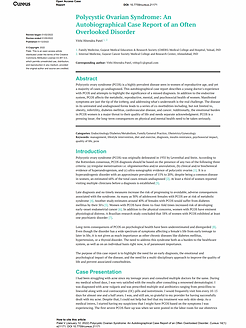
Polycystic Ovarian Syndrome: An Autobiographical Case Report of an Often Overlooked Disorder
Vithi Hitendra Patel, Cureus. 2022 Jan; 14(1): e21171.
Published online 2022 Jan 12. doi: 10.7759/cureus.21171
This 2022 paper is an autobiographical case report written by a young doctor with PCOS. It documents her experience and attempts to highlight the significance of a missed diagnosis, as well as outlining common comorbidities including but not limited to obesity, infertility, diabetes mellitus, cardiovascular disease, and cancer. The author also outlines how mental health issues can stem from PCOS.
Case Studies

"You're just eating unhealthily"
Kate G first developed PCOS symptoms between 3rd and 4th grade. The condition caused her to gain weight, but for years Kate’s endocrinologist assumed – and told Kate – that she was eating unhealthily. That shame contributed to Kate developing harmful eating and exercise habits, and even having a gastric bypass when she was just 24 years old. Read her story here.